Useful answers for
emergency lighting buyers.
Technical guidance, application references, factory updates and practical information for sourcing decisions.
 Technical Guides
Emergency Lighting Test Logbook: A Buyer’s Record Guide
Build an emergency lighting test log that links every asset, function or duration test, fault, corrective action and verified closure.
Read resource → Technical Guides
Emergency Lighting Self-Test vs Manual Testing: A Buyer’s Guide
Compare manual, stand-alone self-test and centrally monitored emergency lighting, then specify tests, indicators, records and commissioning.
Read resource → Technical Guides
Emergency Light IP Rating Guide: IP20, IP44 and IP65 Explained for Buyers
Choose an emergency light IP rating from the actual exposure, then verify the exact enclosure, mounting, cable entries and model-specific evidence.
Read resource → Procurement Guides
Emergency Lighting RFQ Template for Importers and Contractors
Use this answer-oriented emergency lighting RFQ template to compare product variants, technical evidence, OEM scope, quality gates, pricing and delivery terms.
Read resource → Procurement Guides
How to Prepare an Emergency Lighting Product Inspection Plan
Build a model-specific emergency lighting inspection plan with controlled references, risk-based sampling, test methods, evidence and release rules.
Read resource → Procurement Guides
Questions to Ask an Emergency Lighting Manufacturer Before Ordering
Use these emergency lighting manufacturer questions to verify model-specific evidence, production control, traceability, change management and commercial terms before placing an order.
Read resource → Procurement Guides
Emergency Light Labels and Manuals for Export Projects
Emergency light labels and manuals should be controlled by market, model, evidence, language and artwork revision. Use this buyer workflow to align product labels, cartons, instructions, declarations and production files before release.
Read resource → Procurement Guides
Emergency Lighting Lead Time: From Sample Approval to Mass Production
Emergency lighting lead time should be built from dated approval, material, production and release milestones—not a single factory-wide number. Define the start point, freeze the exact configuration, identify the critical path and separate production from inspection and transport.
Read resource →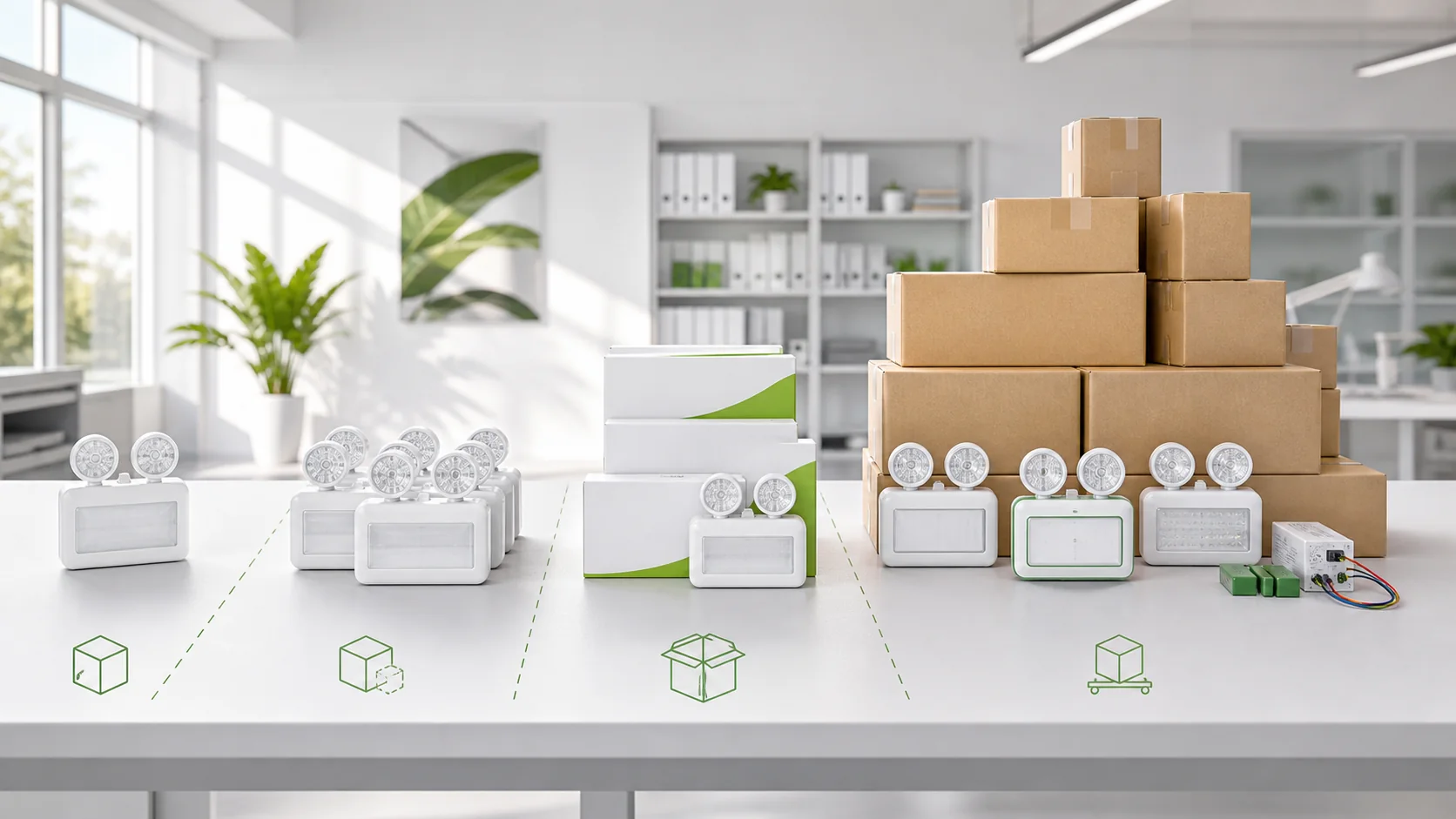 Procurement Guides
How Emergency Light MOQ Changes With Customization
Emergency light MOQ usually changes when a request creates model-specific setup, materials, testing, documentation or inventory that cannot be shared with standard production. Compare MOQ by sellable configuration, not only by the total pieces on the purchase order.
Read resource →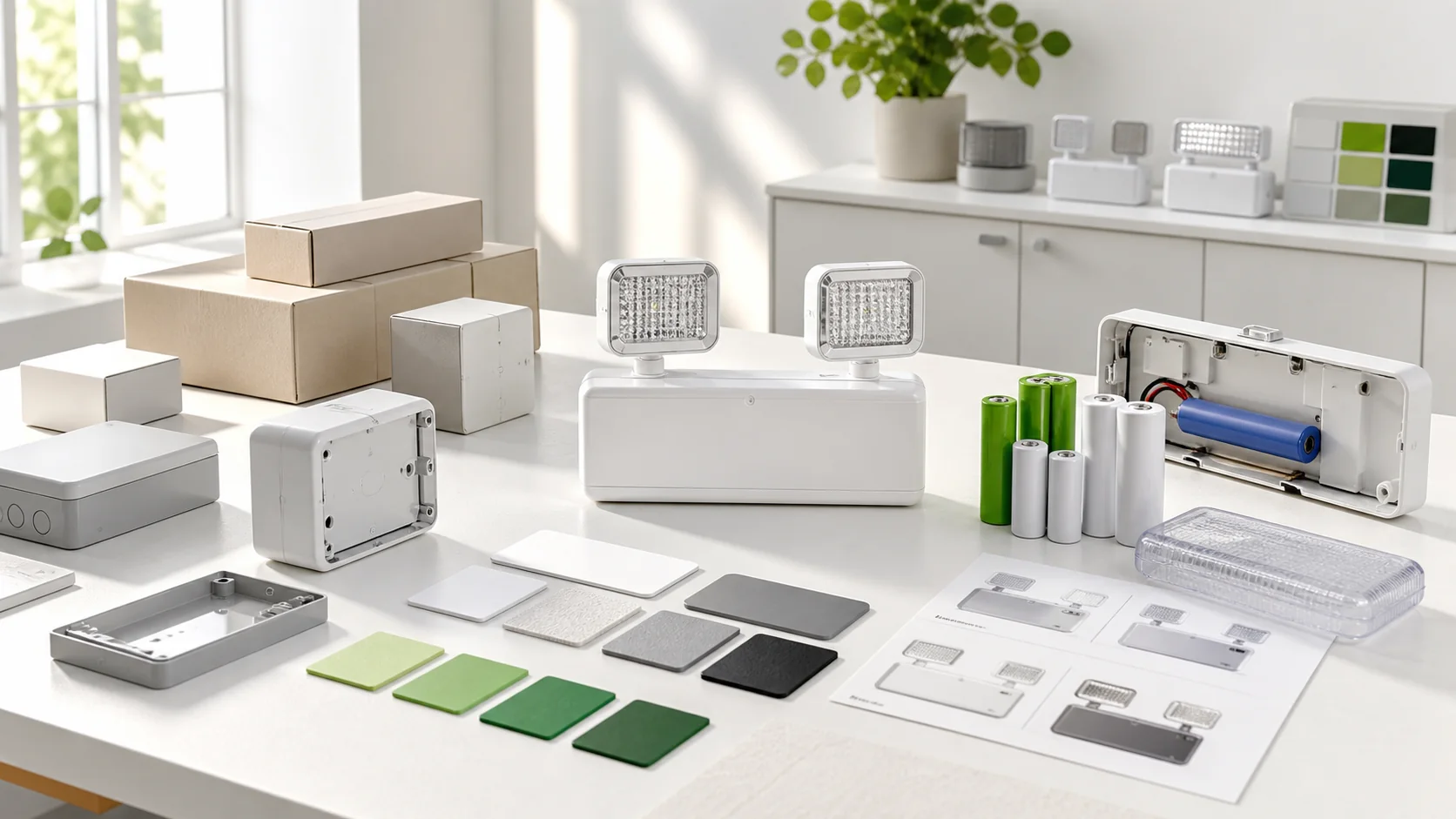 Procurement Guides
OEM Emergency Lighting: Logo, Packaging and Electrical Customization Explained
Plan an OEM emergency lighting project by separating brand artwork, packaging, electrical configuration and product-development changes, then approve each layer against the exact model, destination requirements, evidence and sample.
Read resource →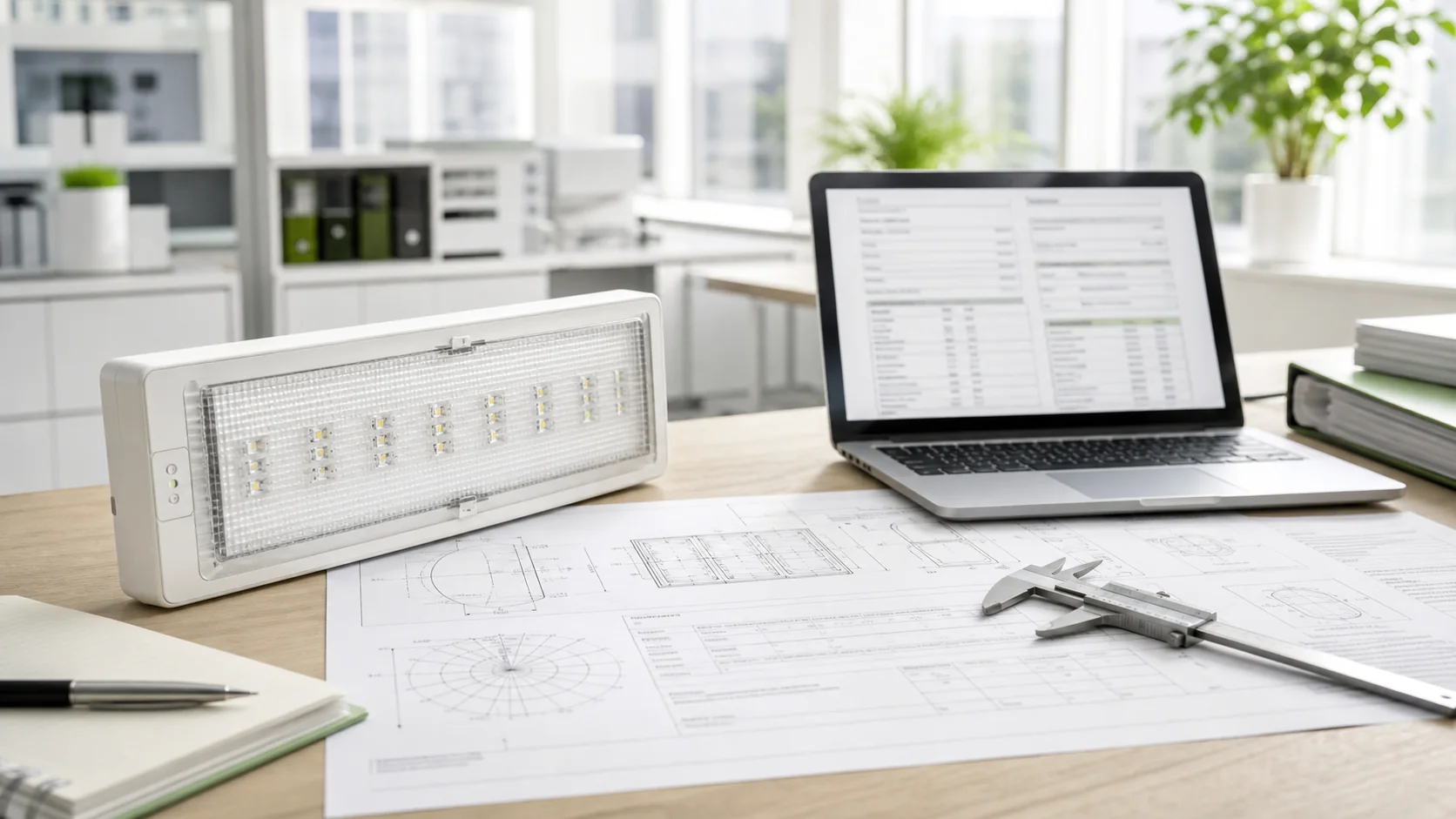 Procurement Guides
How to Read an Emergency Light Specification Sheet: A Buyer’s Guide
Read an emergency light specification sheet in three passes: confirm the exact model and revision, separate normal-mode data from emergency-mode performance, then match every critical claim to model-specific drawings, photometric files, instructions and approval evidence.
Read resource →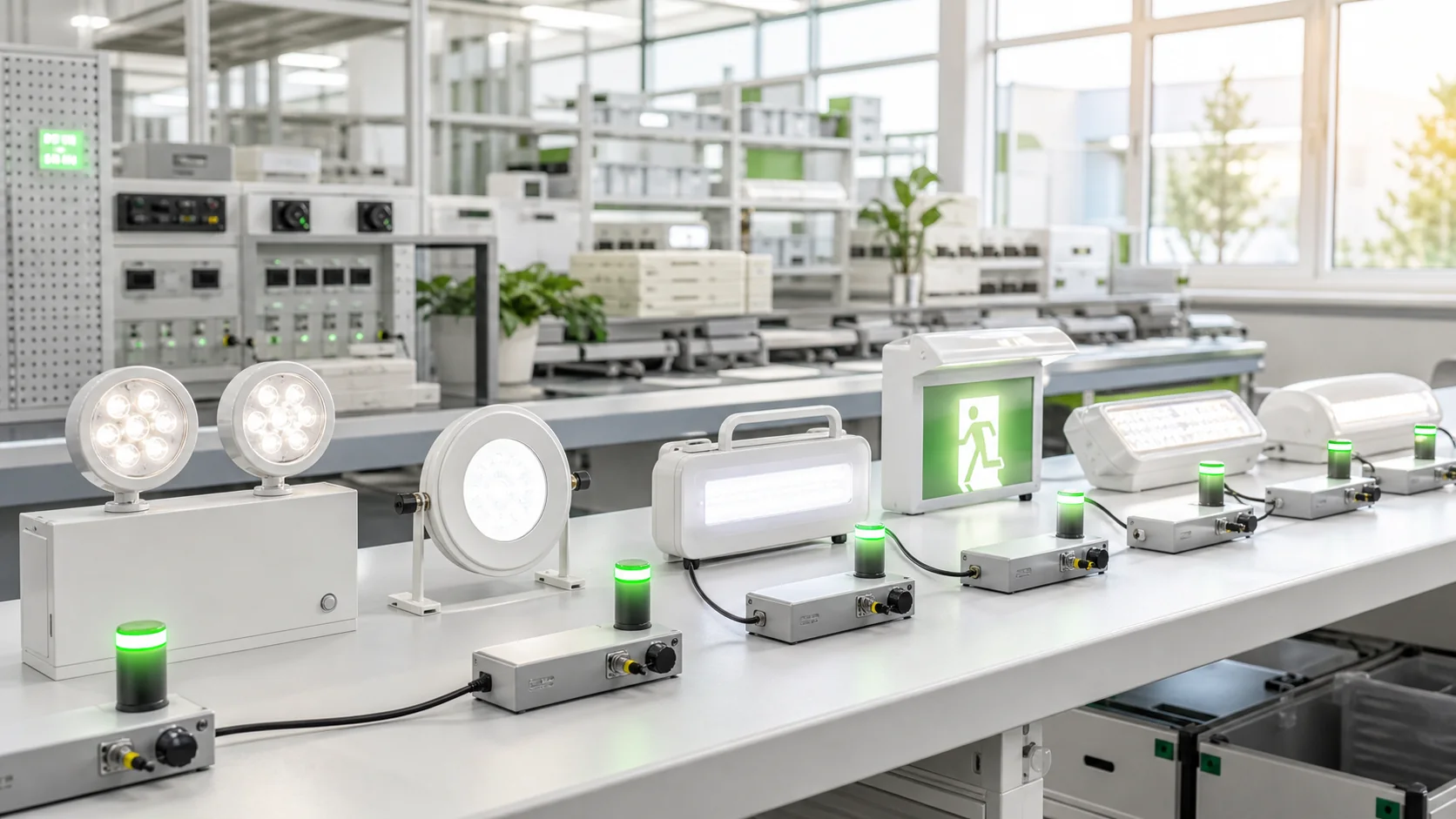 Factory & Quality Guides
Emergency Light Testing Before Shipment: A Factory Checklist
Emergency light testing before shipment should follow a written control plan that links the approved product configuration to incoming checks, in-process controls, finished-unit functions, battery and photometric evidence, labels, packaging, nonconformity closure and a signed release record.
Read resource →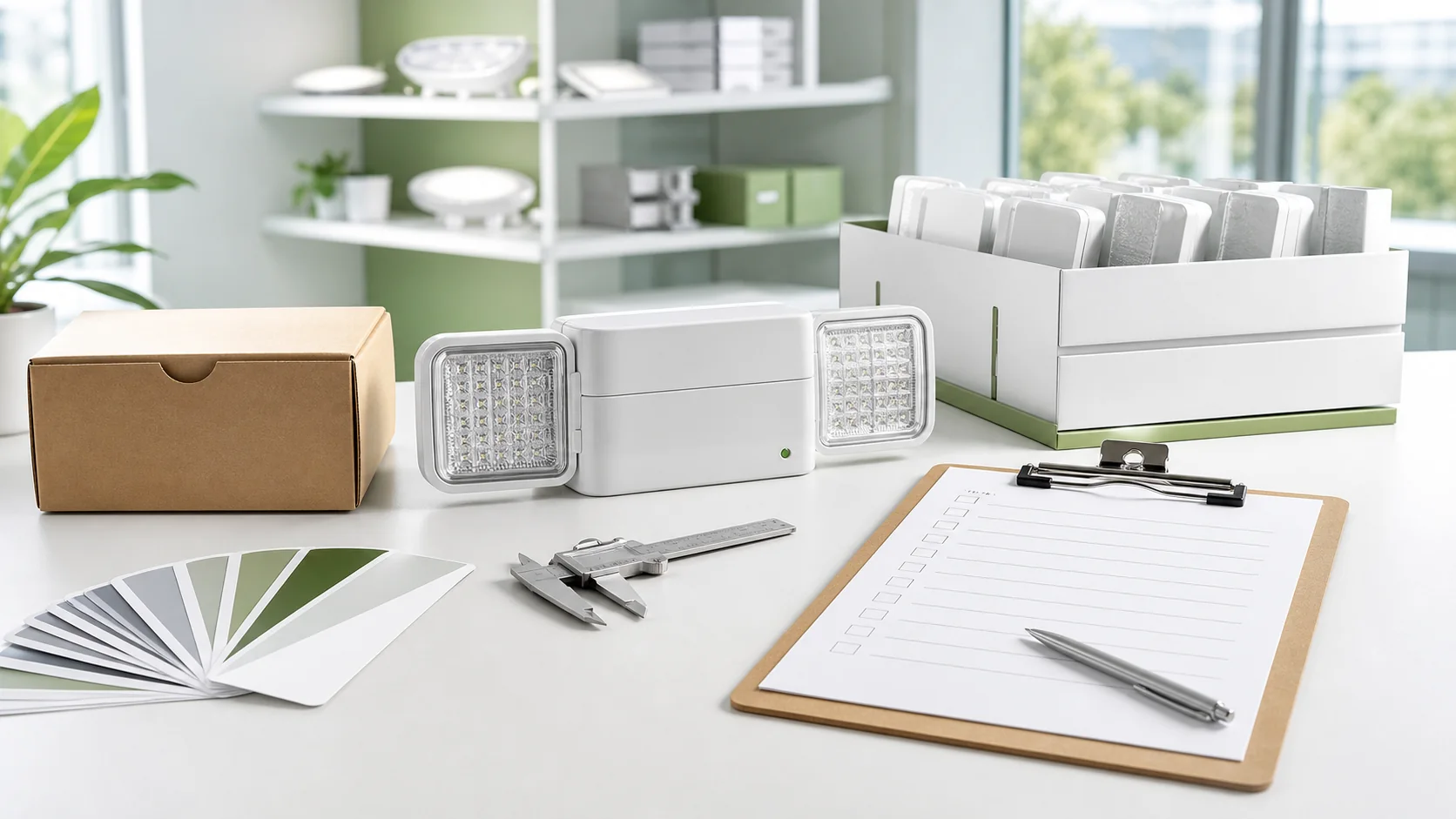 Procurement Guides
Emergency Lighting Sample Approval Checklist for Buyers
Approve an emergency-lighting sample against one controlled specification, not a photograph or a successful switch-over alone. Verify product identity, electrical configuration, emergency output and duration, construction, markings, documents, artwork, packaging and change control before authorizing mass production.
Read resource →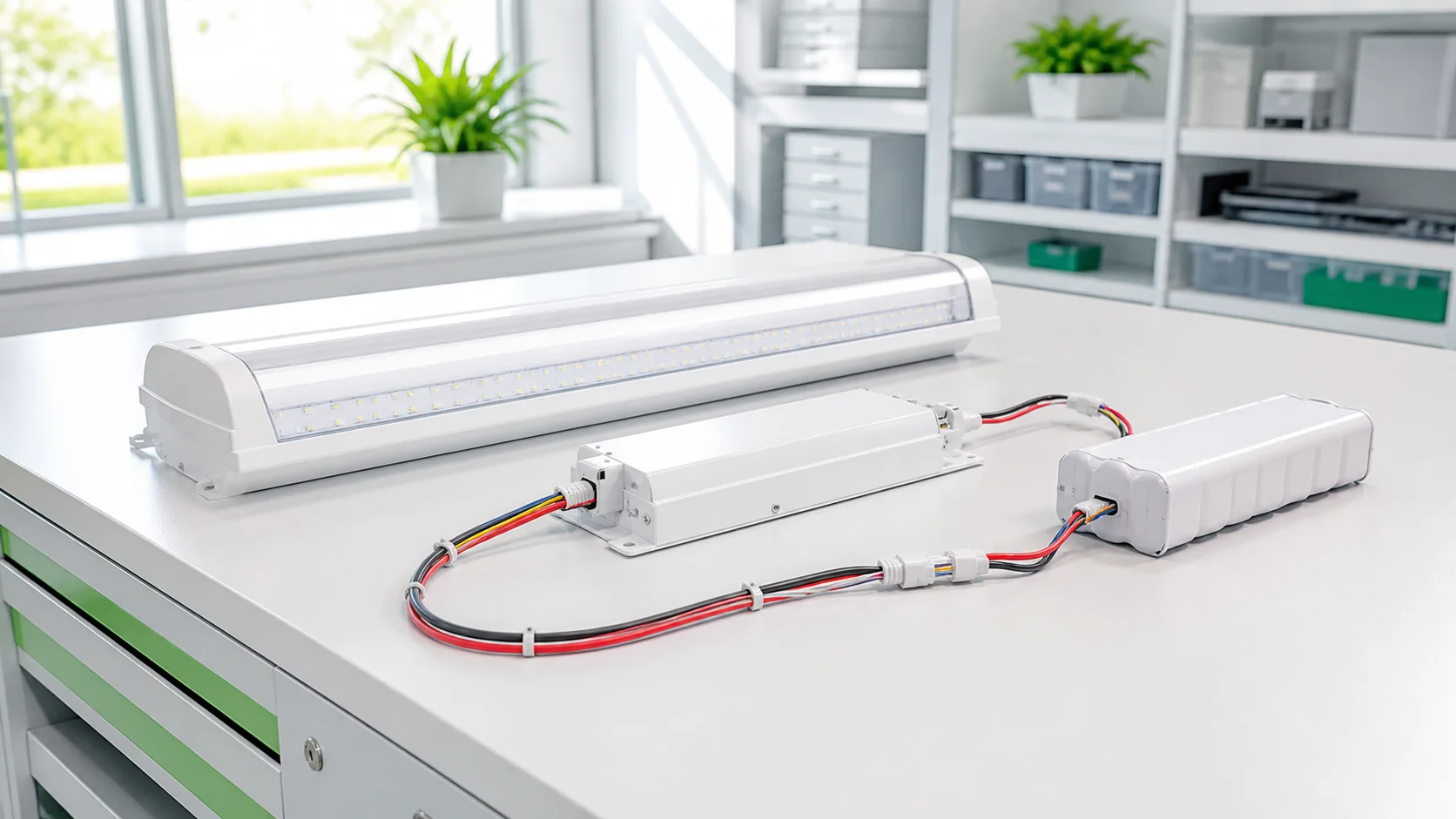 Technical Guides
Emergency Conversion Kit Buyer Guide: Compatibility, Output and Approval
Approve an emergency conversion kit as part of one complete luminaire system. Match the normal driver, LED load, emergency driver, battery, wiring, enclosure and thermal conditions, then verify emergency output, duration and destination-market evidence on the finished configuration.
Read resource → Technical Guides
Emergency Exit Sign Procurement Guide: Legends, Mounting and Approval
Specify an emergency exit sign from the approved route plan and destination-market sign system. Lock the legend or pictogram, arrow direction, face count, viewing direction, mounting, operating mode, duration and exact-model evidence before sample approval.
Read resource → Technical Guides
Emergency Downlight Selection Guide: Recessed vs Surface Mount
Choose an emergency downlight by matching the lighting task, exact optic and emergency output first, then confirm whether the ceiling can safely support recessed or surface mounting. A recessed trim does not prove ceiling compatibility, and a surface housing does not prove photometric coverage.
Read resource → Technical Guides
Twin-Head Emergency Light Buyer Guide: Aim, Coverage and RFQ Evidence
Choose a twin-head emergency light by defining the two lighting tasks, then approve the exact model, mounting position and recorded head directions with emergency-mode photometric evidence. Two adjustable heads, LED watts or battery amp-hours do not prove project coverage.
Read resource → Technical Guides
Emergency Wall Light Selection Guide for Buyers
Choose an emergency wall light from the escape-lighting function, model-specific photometric data, permitted mounting orientation, installation environment and maintenance access. Housing shape or an IP rating alone cannot prove that a wall-mounted emergency luminaire will cover the project correctly.
Read resource →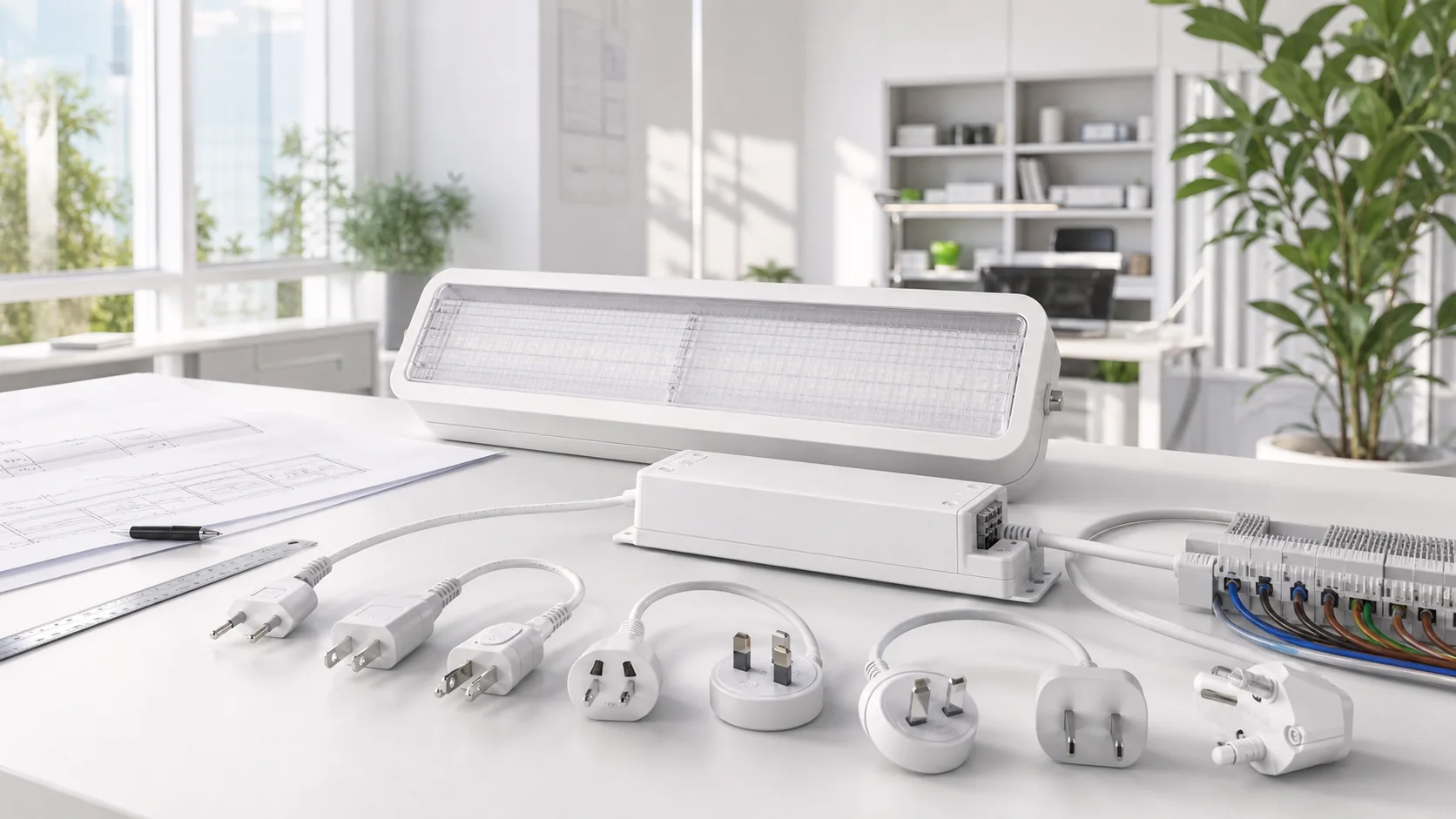 Technical Guides
Emergency Lighting Voltage Guide for International Projects
Specify emergency-lighting mains input as an exact voltage or range, frequency and wiring condition for the destination project. Then lock the driver, charger, label, instructions and approval evidence to that electrical configuration; battery voltage and plug shape are separate fields.
Read resource → Technical Guides
Emergency Light Lumen Output: What Buyers Should Put in an RFQ
Specify emergency light lumen output for the exact model, emergency mode and rated duration, then request the photometric distribution needed to check the project illuminance target. Watts, LED count and normal-mode lumens do not prove emergency-mode performance.
Read resource →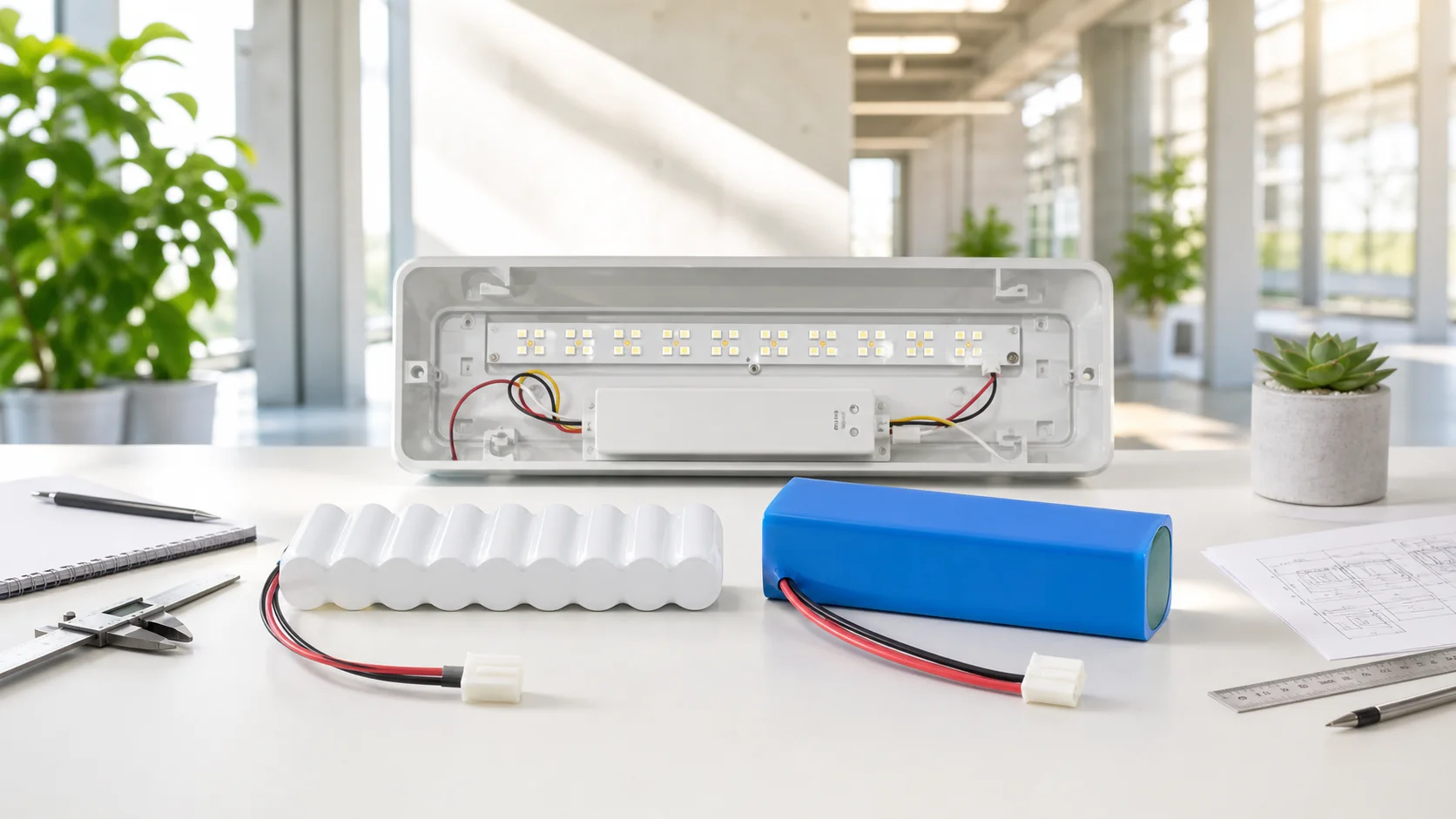 Technical Guides
Ni-Cd vs Li-ion Batteries for Emergency Lights: A Buyer’s Guide
Choose an emergency-light battery as part of the complete luminaire system. Ni-Cd can suit approved high-temperature and established designs, while lithium systems can reduce pack size and add dedicated protection. Market rules, driver compatibility, temperature, storage, transport evidence and model-specific duration decide the safer purchase.
Read resource →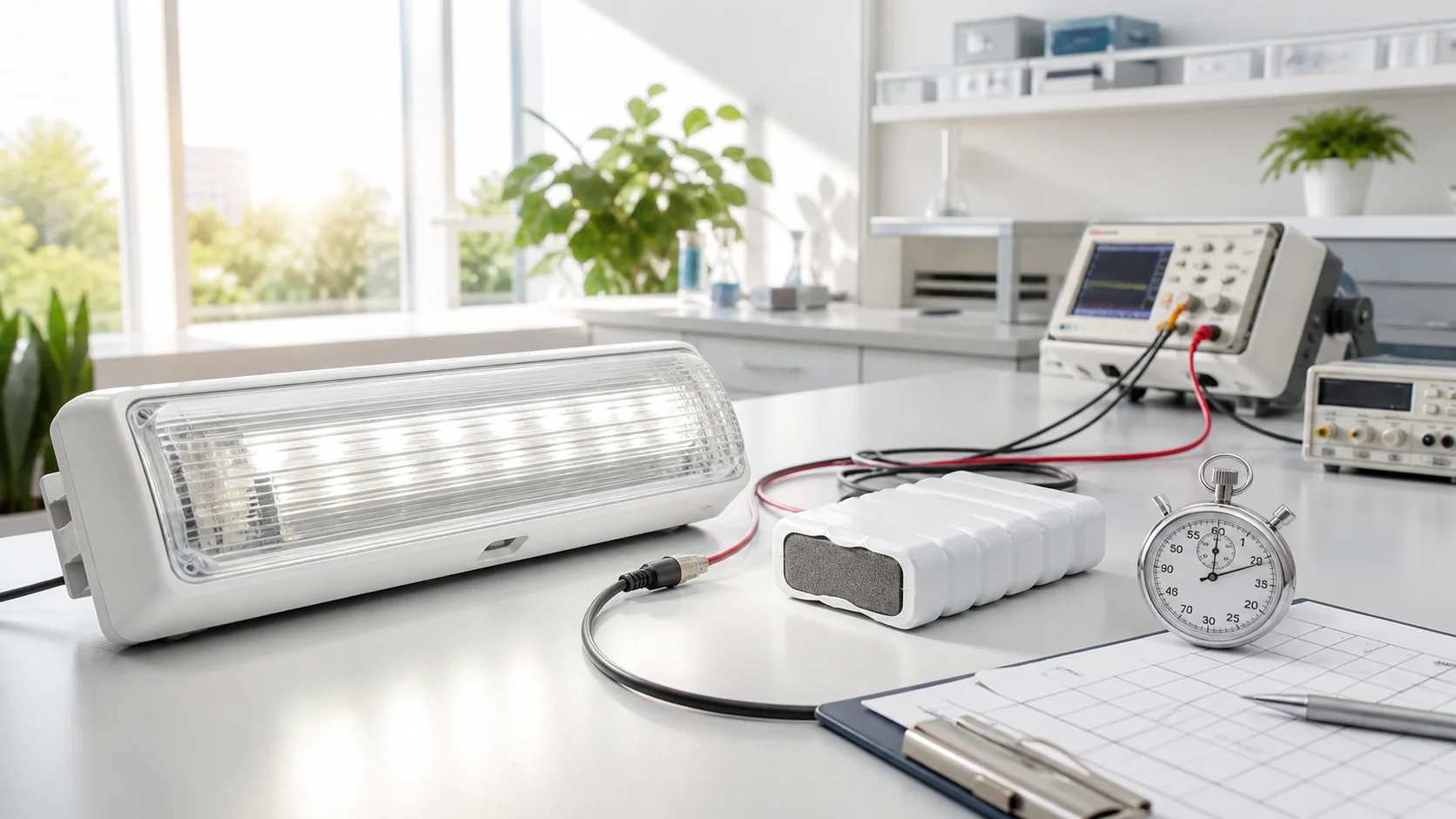 Technical Guides
How to Specify Emergency Lighting Battery Duration Without Guessing
Specify emergency lighting battery duration from the project jurisdiction, occupancy, evacuation plan and re-entry needs—not from battery amp-hours or a supplier default. The RFQ should state rated duration, emergency output, applicable rules, recharge expectations and the evidence required for approval.
Read resource → Technical Guides
Maintained vs Non-Maintained Emergency Lighting: A Buyer’s Selection Guide
Maintained emergency lights operate during normal conditions and remain available after a power failure. Non-maintained units normally illuminate only when the normal lighting supply fails. The right mode depends on the space, local requirements and the project risk assessment.
Read resource →Catalogs and verified certificates
Request the product catalog or view available compliance documents.